

How Valeda Light Therapy Works
How Valeda Light Therapy Works
Light as a medical treatment for the retina sounds unlikely the first time you hear it. It is a reasonable thing to be skeptical about, and most patients are.
The short answer is that the treatment is not aimed at your vision directly. It is aimed at the energy supply inside your retinal cells. Here is what that means.
Your Retina Is One of the Most Energy-Hungry Tissues in Your Body
Gram for gram, the retina consumes more energy than almost anything else you are made of. It runs constantly, processes an enormous amount of information, and never gets a night off.
That energy is produced by mitochondria, the small structures inside each cell that convert oxygen and nutrients into usable fuel. A healthy retinal cell is packed with them.
As we age, mitochondria become less efficient. They produce less energy and generate more of the cellular waste products that accumulate over time. In dry age-related macular degeneration, this decline appears to be part of what drives the disease. Cells that cannot keep up with their own energy demands begin to struggle, and the debris that builds up beneath the retina, which your physician may call drusen, is one visible sign of that struggle.
What Photobiomodulation Does
Photobiomodulation, or PBM, is the use of specific wavelengths of light to influence activity inside cells.
Within the mitochondria sits an enzyme called cytochrome c oxidase. It is part of the chain of reactions that produces cellular energy, and it happens to absorb light in the red and near-infrared range. When it absorbs that light, researchers have observed a cascade of effects: increased production of ATP, the molecule cells use as fuel, along with reduced levels of reactive oxygen species and changes in the pathways associated with cellular stress and inflammation.
Put simply, the working theory is that the right wavelengths of light give struggling mitochondria a nudge, and better-fueled cells are better able to maintain themselves.
This is a mechanism supported by laboratory research and observed in clinical study. It is not a guarantee of what will happen in any individual eye, and your physician will be direct with you about that.
Why Three Different Wavelengths
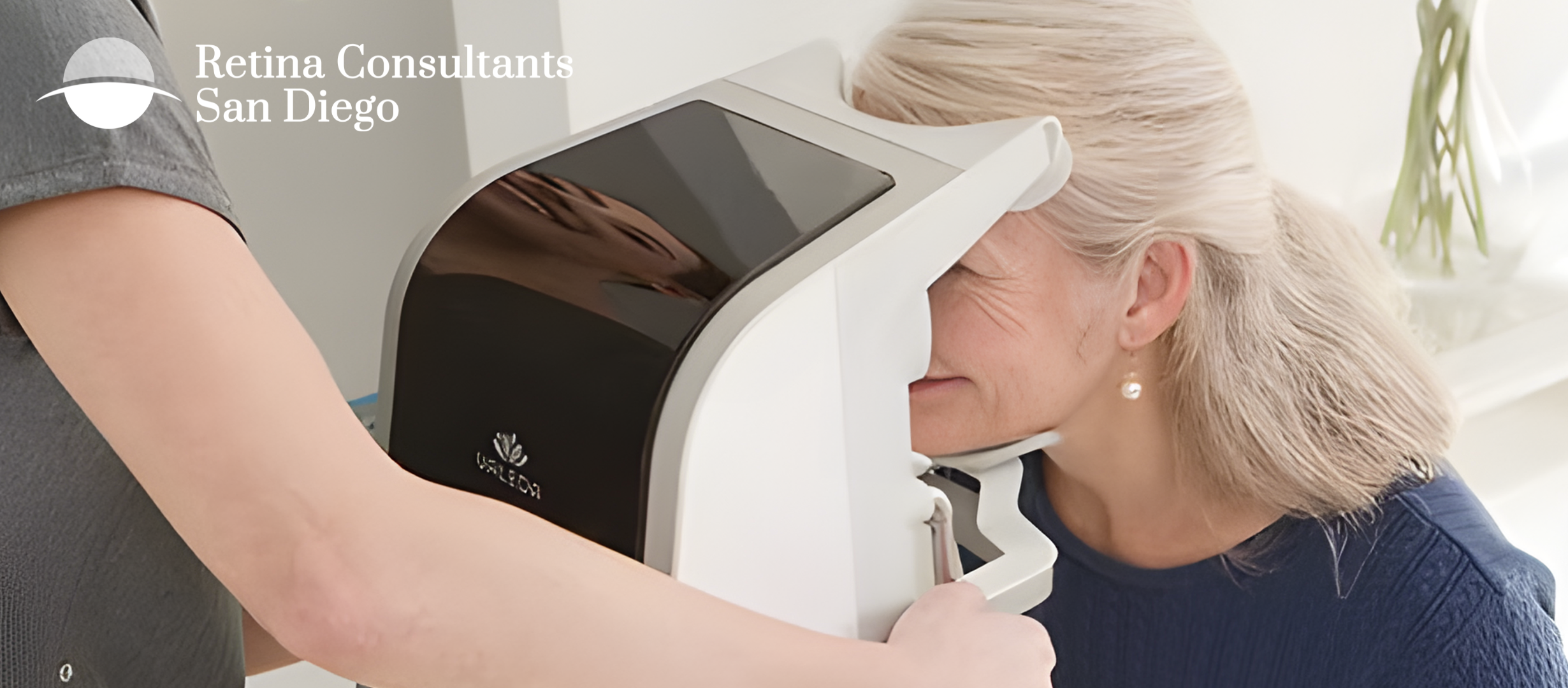
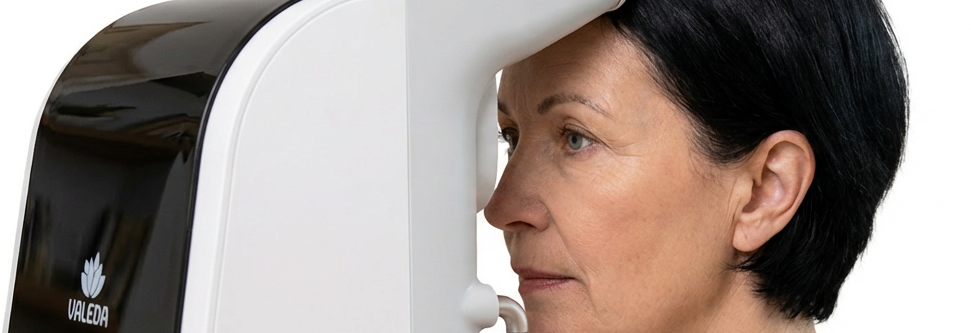
The Valeda Light Delivery System delivers three wavelengths in each session:
- 590 nanometers, which is yellow light
- 660 nanometers, which is red light
- 850 nanometers, which is near-infrared and invisible to the human eye
Different wavelengths penetrate to different depths and engage different sites in the cellular machinery. Using three rather than one is intended to create more opportunities for the light to reach and activate the systems it is meant to affect.
You will see the yellow and red light during treatment. You will not see the near-infrared, though it is being delivered at the same time.
What Valeda Is Not
This comes up often enough that it is worth addressing directly.
It is not a laser. Valeda uses low-intensity light-emitting diodes. There is no cutting, no heat, and no tissue damage. The light is not intense enough to burn or injure the retina, which is why the treatment is painless and requires no anesthesia or recovery time.
It is not surgery, and it is not an injection. Nothing enters the eye. There are no drops, no needles, and no medication involved.
It is not the same as a red light therapy device you can buy online. Consumer red light panels and masks are not authorized for the treatment of macular degeneration, have not been studied for it, and do not deliver the specific wavelengths, intensities, and treatment schedule used in the clinical trials that supported Valeda's FDA authorization. If you are considering an at-home device for your eyes, please talk to us before you use it.
Where the Idea Came From
Photobiomodulation is not new. Research into the biological effects of red and near-infrared light goes back decades, including work on wound healing and tissue repair.
What is new is the application to the retina, the specific multiwavelength approach, and the clinical evidence supporting it. The FDA granted marketing authorization to the Valeda Light Delivery System in November 2024, making it the first light-based therapy authorized in the United States for dry AMD.
What the Research Found
In LIGHTSITE III, a multicenter randomized trial with a sham-controlled comparison group, treated eyes showed measurable improvement in visual acuity relative to sham, along with differences in how drusen volume changed over the study period.
The effect size was modest and individual results varied. Benefit is not guaranteed, and it is possible that any benefit may not persist significantly once treatment stops. You can read more about the findings on our Valeda light therapy page, and your physician will go through what the data does and does not show for someone in your situation.
What It Cannot Do
We would rather be plain about the limits than have you discover them later.
Valeda does not cure macular degeneration. There is no cure for dry AMD. It does not reverse damage that has already occurred, it is not a treatment for wet AMD, and it is not intended for eyes in which geographic atrophy already involves the center of vision.
It is one option, for a specific group of patients, aimed at supporting cells that are still working.
Is Valeda Right for You?
Understanding the mechanism is a good start. Whether it applies to your eyes is a separate question, answered by an exam with retinal imaging rather than by symptoms or interest alone.
Read about what we look at and what rules Valeda out, or see what treatment involves.
Fill out our evaluation form and our team will review your information and reach out to discuss candidacy, scheduling, and next steps. You can also reach us at 858-451-1911.